
- Insights
Meet TitanOps T20: Built for Large-Scale Sites
A university doesn't have one security problem. It has dozens of buildings, a few parking structures, a stadium that fills on Saturday and sits empty by Monday, and cameras installed by whoever won the bid in each decade. A large commercial operation has the same problem with different names: distribution centers, plants, headquarters, lots and loading docks spread across a region.
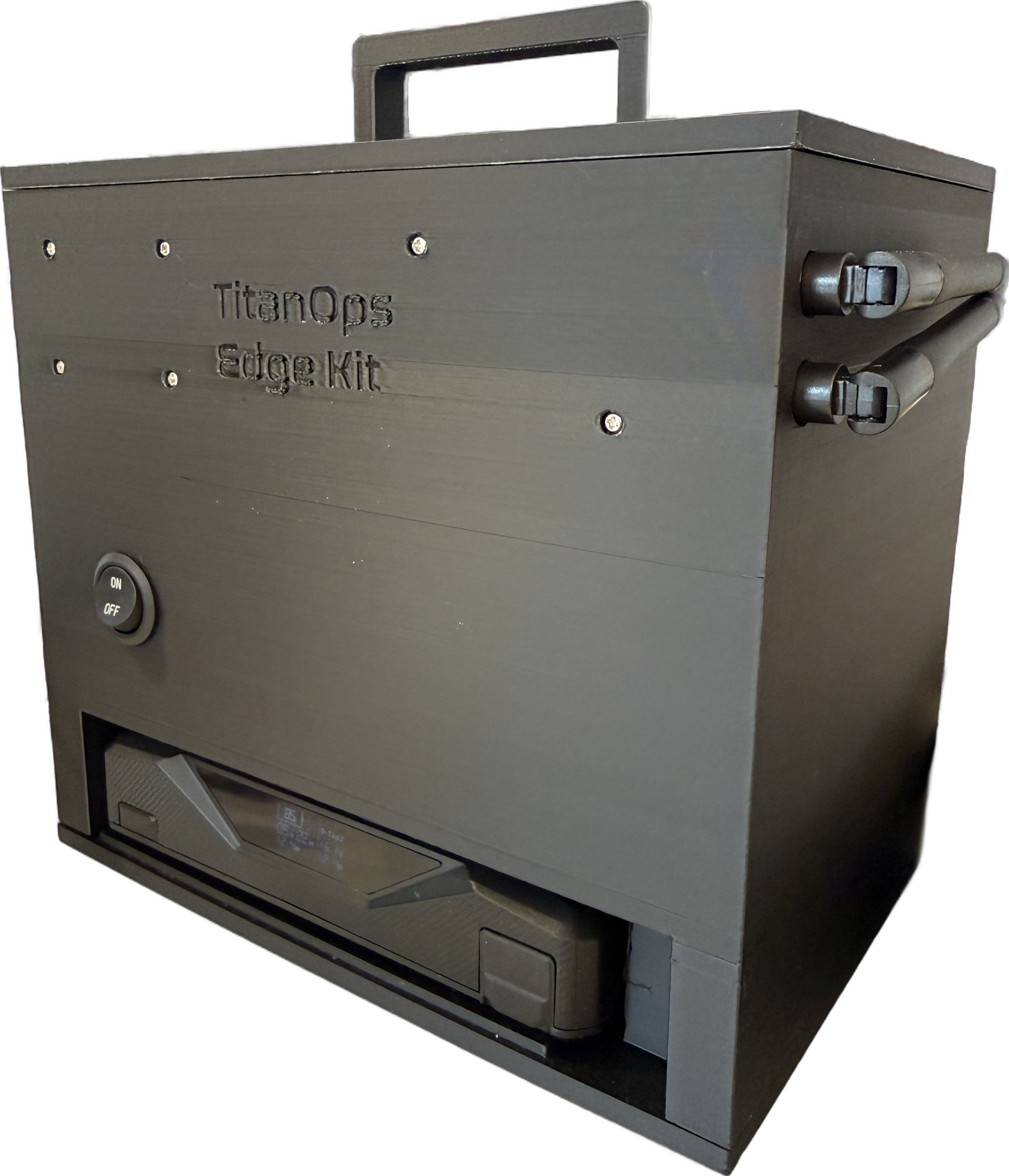
TitanOps T20 is the largest offering in the TitanOps lineup, built for that kind of footprint.
At a glance
The case for a single enterprise platform
Large organizations already have an option: pick one vendor's enterprise platform, cameras and software together, and standardize on it. That approach has real strengths. One vendor owns the whole stack, support is one phone call, and every new build looks like the last one. If you are starting from bare walls with the budget to match, it can be a sound choice.
The other common path is to let each building or location keep its own system and live with the gaps.
Where large sites get stuck
Standardizing means replacing. Moving to a single-vendor platform usually means pulling working cameras from other manufacturers. On a campus or a commercial portfolio with years of mixed installs, that's a capital project before the first useful alert.
Each site becomes an island. When every building or location runs its own system, nobody sees the whole picture. An event that starts at one entrance and ends at another shows up as two unrelated records.
Fixed rules don't fit a changing calendar. A stadium on game day and the same stadium on a Tuesday need different rules, and so does a plant between shifts. Settings that never change either flood operators on busy days or stay quiet when something is actually wrong.
Alerts stay on one screen. If events can't reach the other systems your team works in, someone ends up retyping them.
One power failure blinds the site. Large sites can't afford a system that goes dark when the power does.
Isolated advanced features. The most challenging areas get the concentrated focus for upgrades and advanced features, every other area is left behind.
What TitanOps T20 brings
- Every site in one view. Buildings, lots and separate locations feed one operational view with one alert queue, with cameras and access control side by side. Operators can watch the whole footprint or narrow to a single site.
- The cameras you already own. T20 runs on existing cameras from any manufacturer. It handles 25 cameras with every feature enabled and scales beyond that through a hybrid model with advanced analytics, tuned to the site. Mixed fleets become one system, with no rip-and-replace.
- Behavior and alerting set by area and schedule. Beyond person, vehicle and animal detection, T20 handles basic behaviors such as a person falling, injuries across the site, loitering, after-hours intrusion, crowd density, wrong-way movement, vehicles dwelling in fire lanes and unattended objects. Custom-trained behaviors cover patterns specific to your site. Alert rules are configured by area, time and behavior, so the game-day lot and the Tuesday lot each get rules that fit.
- Built-in redundancy and battery backup. T20 includes redundancy and battery backup for up to 8 hours of use, so it keeps running if power is lost.
- An external API. T20 includes an external API, so TitanOps events can flow into other systems your team relies on instead of living only on our screen.
- Drone-ready, when you are. For sites that want it later, drones can be added as an optional expansion in the same interface and alert queue.
Like every offering in the lineup, T20 is designed to deploy as quickly as, if not quicker than, a typical IP camera. Our installers are trained to configure and fine-tune it for each environment, and Vigilare stays available afterward with on-site or remote support.
| Separate system per site | Single-vendor enterprise platform | TitanOps T20 | |
|---|---|---|---|
| Existing cameras | Kept, but analytics vary by site | Often replaced | Kept, from any manufacturer |
| Multi-site view | No | Yes | Yes, with one alert queue |
| Alert rules by area and schedule | Varies by site | Depends on the vendor | Configurable by area, time and behavior |
| Power loss | Varies by site | Depends on the vendor | Built-in redundancy and battery backup for up to 8 hours |
| Sending events to other systems | Site by site | Depends on the vendor | External API |
| Drones | A separate system | Depends on the vendor | Optional expansion, same interface |
| Setup and support | Varies by site | From the vendor | Trained installers, plus on-site or remote support from Vigilare |
Who it's for
TitanOps T20 fits if you:
- Run a university or college campus with many buildings and lots
- Operate a stadium, amphitheater or event venue whose activity changes from day to day
- Manage a very large commercial site or a portfolio of them, such as plants, warehouses, distribution centers or corporate campuses
- Cover several municipal sites that should be watched as one
- Need TitanOps events to reach other systems through an API
- Need the system to keep running through a power outage
- Desire advanced features on all your camera feeds, even those from the early days
- Have a need for enhanced safety or security but not the budget for a major overhaul
- Expect to add drones or other sensors later
If you protect one building or a handful of high-concern cameras, the smaller end of the lineup is likely the better fit. We'll cover other platforms in the coming weeks but every tier sits on the same platform, so a site can step up as it grows.
For integrators, T20 is how you bid the largest jobs without changing camera lines. You keep the install and the customer relationship; we bring the decision layer, the training and the support behind it.
The bottom line
Large sites shouldn't have to choose between replacing every camera and running a dozen disconnected systems. TitanOps T20 puts every building, lot and location in one view, on the cameras already installed, with rules that change when the site does and power that doesn't have to.
Explore the right solution for your needs. Bring your camera list and site map, and a Vigilare engineer will walk through how T20 would cover your footprint. Contact us to start the conversation.